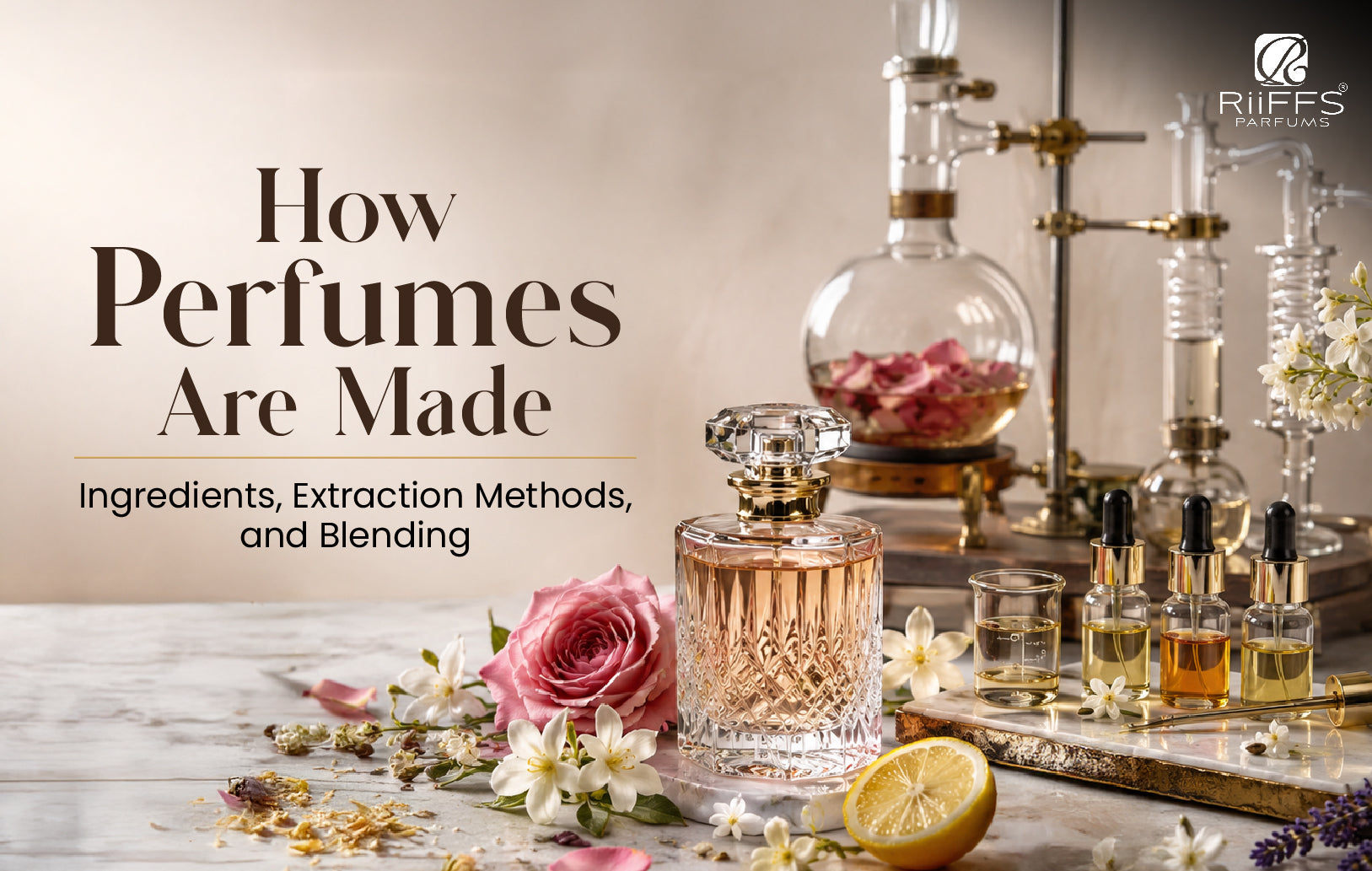
How Perfumes Are Made: Ingredients, Extraction Methods, and Blending
Perfume is more than a pleasant fragrance it's an expression of personality, emotion, and craftsmanship. Every bottle tells a story that begins with carefully selected ingredients, continues through precise extraction techniques, and comes to life through the art of blending. At Riiffs Perfumes, every fragrance is created with a commitment to quality, innovation, and timeless elegance.
In this blog, we'll explore how perfumes are made, from sourcing premium ingredients to crafting beautifully balanced scents.
The Foundation of Every Fragrance: Perfume Ingredients
The quality of a perfume starts with its ingredients. Perfumers use a combination of natural and synthetic materials to create fragrances that are distinctive, long-lasting, and memorable.
Natural Ingredients
Nature has always been one of the greatest sources of inspiration for perfumery. Common natural ingredients include:
-
Flowers: Rose, jasmine, lavender, tuberose, and ylang-ylang provide delicate floral notes.
-
Fruits: Citrus fruits like bergamot, lemon, orange, and grapefruit add brightness and freshness.
-
Spices: Cinnamon, cardamom, saffron, black pepper, and clove create warmth and complexity.
-
Woods: Sandalwood, cedarwood, oud, and vetiver contribute depth and richness.
-
Resins and Balsams: Frankincense, myrrh, benzoin, and amber-like accords provide warmth and longevity.
Synthetic Ingredients
Modern perfumery also relies on high-quality synthetic aroma molecules. These ingredients help recreate rare natural scents, improve consistency, enhance longevity, and support sustainable fragrance production by reducing the demand for limited natural resources.
The perfect fragrance often combines both natural and synthetic ingredients to achieve balance, creativity, and exceptional performance.
Extracting the Essence of Nature
Before ingredients can become part of a perfume, their aromatic compounds must be extracted. Different materials require different extraction methods to preserve their unique scent profiles.
Steam Distillation
Steam distillation is one of the most widely used extraction methods. Steam passes through flowers, leaves, or wood, releasing aromatic oils that are then condensed and separated from water. This technique is ideal for ingredients like lavender, eucalyptus, and rosemary.
Cold Press Extraction
Citrus fruits contain aromatic oils in their peels. These oils are extracted through mechanical pressing without heat, preserving their fresh, vibrant aroma.
Solvent Extraction
Delicate flowers that cannot tolerate high temperatures are processed using gentle solvents. This method produces fragrant waxes that are further refined into concentrated absolutes, prized for their rich and luxurious scent.
CO₂ Extraction
One of the most advanced techniques in modern perfumery, supercritical CO₂ extraction uses pressurized carbon dioxide to obtain highly pure aromatic compounds while maintaining the ingredient's natural character.
The Art of Blending Fragrance Notes
Once the aromatic ingredients are ready, the real artistry begins.
Professional perfumers carefully blend hundreds of ingredients to create fragrances with harmony, balance, and character. Each perfume is designed around three layers of fragrance known as the fragrance pyramid.
Top Notes
These are the first scents you notice after applying perfume. Usually light and refreshing, they include citrus, herbs, and fresh fruits. Top notes create the first impression but fade relatively quickly.
Heart Notes
Also known as the middle notes, these emerge as the top notes disappear. Floral, fruity, and spicy ingredients dominate this stage, forming the personality of the fragrance.
Base Notes
Base notes appear last and remain the longest on the skin. Ingredients such as sandalwood, vanilla, musk, amber accords, patchouli, and oud provide richness, warmth, and lasting power.
A well-crafted perfume transitions smoothly through these layers, creating an evolving scent experience throughout the day.
Aging and Maturation
After blending, the fragrance is allowed to mature. During this resting period, the ingredients interact and harmonize, resulting in a smoother, more refined scent profile. Depending on the formulation, this process may take several weeks before the perfume is filtered and prepared for bottling.
Filtration, Bottling, and Quality Assurance
Before reaching customers, every fragrance undergoes filtration to remove any impurities. The perfume is then carefully bottled under controlled conditions to preserve its quality.
Rigorous quality checks ensure consistency in fragrance, clarity, stability, and overall performance. Every bottle should deliver the same luxurious experience from the first spray to the last.
The Riiffs Perfumes Approach
At Riiffs Perfumes, fragrance creation is a blend of tradition, innovation, and meticulous attention to detail. Every perfume is crafted using carefully selected ingredients, advanced formulation techniques, and thoughtfully balanced fragrance compositions designed to suit diverse tastes and occasions.
Whether you prefer fresh citrus aromas, elegant florals, warm woody scents, or rich oriental compositions, Riiffs Perfumes is dedicated to creating fragrances that inspire confidence and leave a lasting impression.
Final Thoughts
Creating a perfume is both a science and an art. From sourcing premium ingredients and using sophisticated extraction methods to blending carefully balanced fragrance notes, every stage contributes to the final masterpiece.
The next time you wear your favorite fragrance, remember the craftsmanship behind every drop. At Riiffs Perfumes, each bottle represents a passion for excellence, creativity, and the timeless beauty of fine perfumery.
Discover the world of Riiffs Perfumes and experience fragrances that are thoughtfully crafted to complement every personality and every moment.